


Open an Offshore Brokerage Account
An offshore brokerage account gives private investors, traders, family offices, and international companies a more flexible way to access global markets, diversify holdings, and structure wealth beyond one domestic financial system. It can support securities trading, multi-currency investing, cross-border asset management, and broader financial planning. We help clients choose the right offshore broker, prepare the compliance file, and complete the account opening process with legal and onboarding support from start to finish.
Excellent 4,6 out of 5

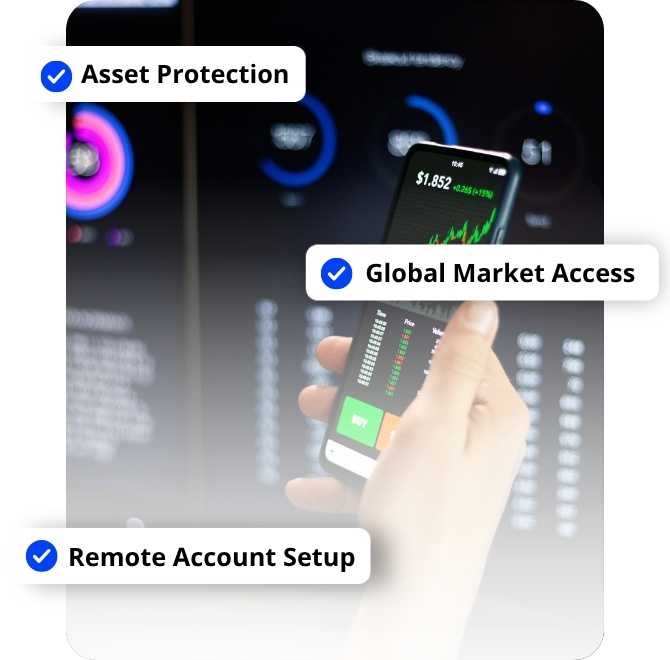
What Is an Offshore Brokerage Account & Why It’s a Strategic Asset
An offshore brokerage account gives investors and international businesses a more flexible way to access global markets, diversify holdings, and protect capital from purely domestic financial risks.
An offshore brokerage account is an investment account opened with a foreign or internationally oriented brokerage institution rather than through a domestic provider in your home country. It allows clients to buy, hold, and manage global financial assets through an offshore brokerage structure designed for international investing, wider market access, and stronger jurisdictional diversification.
Compared with a standard domestic investment account, an offshore setup can offer broader access to foreign exchanges, more flexible currencies, and a better structural fit for clients who live, invest, or operate across borders. For many investors, it is also a strategic tool for reducing concentration risk. Keeping all capital, all reporting, and all financial access in one country may look simple on paper, but it can create unnecessary exposure to local banking pressure, political shifts, currency instability, and legal vulnerability.
That is why an offshore brokerage account is often seen not only as an investment vehicle, but as a capital protection tool. Used properly and compliantly, it helps separate wealth from purely domestic risk and creates a stronger base for long-term international investing.
Why Elite Investors Move Their Capital Offshore
For many experienced investors, offshore structuring is not about image or theory, but about stronger protection, wider market access, and more resilient long-term wealth planning.

Unmatched Asset Protection
A properly structured offshore brokerage account can help protect wealth from local instability, excessive litigation pressure, and concentration risk inside one national system.
Global Market Access & Diversification
An offshore brokerage structure opens the door to broader international exchanges, foreign securities, and more diversified portfolio strategies across regions and sectors.
Tax & Fiscal Efficiency
Depending on your residency, corporate structure, and reporting obligations, offshore investing may support more efficient long-term planning. This is never about magic loopholes. It is about lawful structuring and proper tax awareness.
Enhanced Privacy & Confidentiality
Offshore investment structures can provide a higher level of confidentiality and a cleaner separation between the individual and the assets, especially when paired with a corporate holding structure.
Currency Diversification
Holding and trading across several major currencies can reduce overdependence on one national currency and improve flexibility in volatile environments.
International Wealth Mobility
For globally active investors, offshore structures make it easier to manage assets, move capital, and maintain continuity across several jurisdictions.
Types of Offshore Brokerage Accounts
Different offshore brokerage accounts are designed for different levels of control, risk, and investment strategy, so choosing the right format matters from the very start.
Cash Accounts
A cash-based offshore trading account is the most straightforward structure. You trade using available funds already deposited into the account, which helps keep leverage risk lower and makes the account easier to understand and manage.
Margin Accounts
Margin-based offshore trading accounts allow investors to borrow against account assets for more active trading strategies. These are more suitable for experienced traders who understand leverage, risk exposure, and margin call mechanics.
Discretionary/Managed Accounts
In this model, the portfolio is managed by professionals according to an agreed mandate. This can be useful for clients who want exposure to offshore investing without making every trade themselves.
Retirement/Pension Accounts
Some international structures are designed around long-term preservation, retirement planning, or regulated pension frameworks. These are especially relevant for cross-border professionals and globally mobile investors.
Your Gateway to Global Assets: What Can You Invest In?
An offshore brokerage account is not limited to one asset class. Depending on the provider and jurisdiction, you may gain access to a wide range of international instruments:
-
 Global Equities (Stocks & ETFs)
 -
Fixed Income (Bonds)
-
Mutual & Hedge Funds
-
Precious Metals
-
Cryptocurrencies & Digital Assets
-
Derivatives & Alternative Assets
-
Forex and Multi-Currency Instruments
-
Private Placement and Institutional Opportunities
Find Your Ideal Offshore Brokerage Jurisdiction Today
The right jurisdiction is not chosen by reputation alone. It depends on your residency, investment goals, preferred asset classes, expected account size, reporting obligations, and whether you are opening in a personal or corporate capacity.
Contact an ExpertUliana Syva
Consultant for company registration, bank account opening, residency, and citizenship.
1000+
successful cases
13+
years of experience


Top Brokerage Jurisdictions We Partner With
Different jurisdictions offer different strengths: some focus on strong regulation and private banking quality, others offer more flexible onboarding, broader product access, or a better fit for international corporate structures. The right match depends on your strategy, not on generic rankings.
| JURISDICTION | REG. TIME | CARDS | FEE | ACTION |
|---|
Individual vs. Corporate Accounts: Structuring Your Wealth
Choosing between a personal and corporate brokerage structure affects not only onboarding, but also privacy, asset protection, and long-term control over your wealth.
Personal Brokerage Account
Target: Independent traders and private investors.
Core Benefit: High liquidity and direct control.
Key Features:
- Simplified onboarding for individuals
- Direct access to global stock and forex markets
- Personalized tax reporting depending on residency
Limitation: Assets are held in your legal name, which can make them more visible in transparency systems and more exposed to personal litigation or creditor pressure.
Corporate Investment Structure (Recommended)
Target: High-net-worth individuals, family offices, international groups, and crypto-focused investment structures.
Core Benefit: Maximum asset protection and privacy.
Key Features:
- Legal Veil: The account is owned by an offshore entity such as a BVI company or Nevis LLC, separating your name from the assets
- Institutional Access: Corporate structures may unlock premium products, fund classes, and opportunities not always available to individuals
- Succession Planning: Wealth can often be transferred more smoothly through share ownership than through direct personal asset succession
Advantage: A corporate structure can create a stronger shield against third-party claims, local instability, and unnecessary visibility.
Expert Verdict:
“While individual accounts are faster to open, 90% of our high-balance clients choose a Corporate Structure to ensure their wealth remains private and legally protected from third-party claims.”
Our Turnkey 5-Step Onboarding Process to Set Up Your Offshore Brokerage Account
Our step-by-step onboarding process makes offshore account setup clearer, smoother, and easier to manage from the first assessment to final activation.
Profile and strategy assessment
We review your residency, citizenship, investment goals, risk tolerance, account size, and whether a personal or corporate structure makes more sense.
Broker and jurisdiction matching
We shortlist the most suitable offshore broker or brokerage jurisdiction based on compliance fit, asset access, and onboarding practicality.
KYC and document preparation
We help organize the application file, explain the required documents, and prepare the case for smoother compliance review.
Submission and verification
The documents are submitted to the provider, and we support the client through any follow-up questions, video identification, or additional compliance clarification.
Activation and funding
Once approved, the account is activated, funding instructions are issued, and the client can begin using the offshore brokerage account for investing and portfolio structuring.
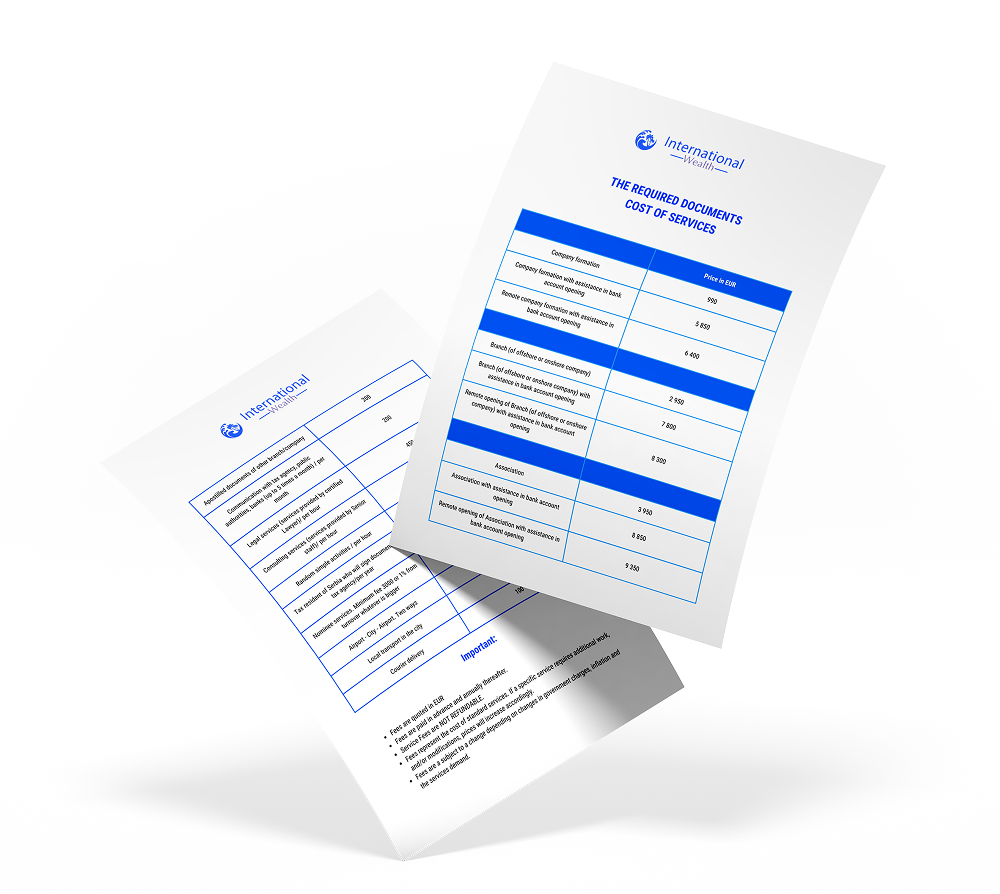
Documents You Typically Need
Brokerages and financial institutions must comply with AML and KYC rules before approving any offshore brokerage accounts. A strong application file makes the process faster and reduces avoidable delays.
Typical documents include:
Certified copy of passport
Proof of residential address
Source of Funds and Source of Wealth explanation
Tax identification number or tax residency declaration
Bank statements for the last 3–6 months
CV or professional profile
Proof of employment, business ownership, or investment activity
Corporate documents, if opening through an offshore company
Completed brokerage application forms and compliance questionnaires
Explanation of investment goals and expected transaction profile
In some cases, the offshore stock brokerage account provider may also request references, audited statements, or supporting documents tied to inheritance, asset sales, dividends, or other capital events.
Why Partner with Us for Your Offshore Brokerage Success?
We help clients avoid weak provider matches, prepare stronger compliance files, and build offshore brokerage structures that work not only on paper, but in real life.
Direct Access to Global Compliance Officers
We do not just “fill in forms.” We work through real communication channels with compliance teams connected to leading offshore providers and international brokerage jurisdictions.
This allows us to conduct practical pre-checks before formal filing, which helps reduce rejection risk and protects your onboarding reputation.
Complex Structure Integration
Most intermediaries focus only on simple personal accounts. We help integrate offshore brokerage solutions into BVI companies, Nevis LLCs, trusts, and broader asset protection structures.
You do not get just another account. You get a legal structure built to support wealth protection, confidentiality, and long-term planning.
100% Remote & Managed Onboarding
Modern account opening no longer needs to feel like a 1997 embassy visit. We coordinate document certification, apostille flow where needed, and remote identification procedures.
You save time, avoid unnecessary travel, and complete the process from anywhere while staying focused on your business or investment activity.
Long-Term Asset Strategy Support
Opening the account is only the start. We also help clients think through reporting logic, inbound and outbound funding routes, and operational issues that affect long-term usability.
You gain a partner who understands not just account opening, but the real-life maintenance of international investment structures.
Ready to Access Global Markets?
A well-chosen offshore brokerage account can give you broader market access, stronger asset structuring, and a more resilient base for long-term investing. Whether you want a personal setup, a corporate investment vehicle, or a more private international structure, we can help you assess the right route before you apply. Contact us for a confidential consultation and a tailored strategy for opening the right offshore investment solution.
Strategic FAQ: Offshore Brokerage & Investment Accounts
Is it legally permissible for me to open an offshore brokerage account?
Yes, in most cases it is legal to open an offshore brokerage account, provided you comply with tax, reporting, and disclosure rules in your country of residence. The structure itself is not illegal. Problems usually begin only when clients ignore compliance obligations.
Can the entire account opening process be handled remotely?
In many cases, yes. Modern offshore brokerages often allow remote onboarding, including digital document submission and video verification. Some premium providers may request extra verification, but many accounts can be opened without travel.
What is the minimum capital requirement to establish a premium offshore account?
The minimum depends on the jurisdiction, the broker, and the type of account. Some offshore investment accounts can start relatively modestly, while premium or institutional setups may require a much higher initial deposit.
How long does the professional onboarding and compliance process typically take?
It varies by provider and by the complexity of your file. Some applications move quickly, while corporate structures, higher balances, or multi-jurisdiction cases usually take longer because compliance review is more detailed.
What are the primary advantages of a Corporate Brokerage Account over a Personal one?
A corporate structure can provide stronger asset protection, improved privacy, better succession planning, and access to institutional products. That is why many serious investors prefer corporate offshore brokerage accounts over purely personal setups.
How is my financial privacy maintained under global CRS and FATCA reporting standards?
Privacy today is about lawful structuring, not invisibility. A properly built offshore structure can still provide a higher level of confidentiality and asset separation, while remaining compliant with CRS, FATCA, and related reporting rules.
Are these offshore platforms compatible with cryptocurrency and digital asset trading?
Some are, yes. Certain offshore broker and platform options support crypto exposure or digital asset activity, but this depends heavily on the jurisdiction, regulation, and the provider’s internal policy.
Will I have instantaneous access to my funds and global liquidity?
Access depends on the asset type, settlement cycle, and platform rules. Publicly traded assets are generally more liquid, while certain funds, structured products, or alternative holdings may involve longer exit timing.
What specific documentation is required to satisfy strict international AML/KYC regulations?
Most providers require proof of identity, proof of address, source of funds, tax details, and account application forms. Corporate structures will also require company documents and beneficial ownership information.
What institutional safeguards protect my assets in the event of brokerage or jurisdictional instability?
The answer depends on the jurisdiction, the custody model, the broker’s regulatory framework, and how client assets are segregated. One of the main reasons investors diversify across offshore jurisdictions is to reduce single-point exposure and improve structural resilience.