


Belize Trust Formation
Looking for a jurisdiction designed for reliable asset protection and a high level of privacy for your long-term succession planning? Belize trust formation may be the right choice. You can set up a Belize International Trust without visiting Belize to take advantage of tax-neutral treatment for non-residents.
The key advantage of a Belize asset protection trust is immediate asset protection (right after transfer). Other jurisdictions impose a waiting period, but not Belize. A properly established trust is a powerful instrument for entrepreneurs and families that ensures confidential wealth holding and bulletproof protection from creditors.
Excellent 4,6 out of 5

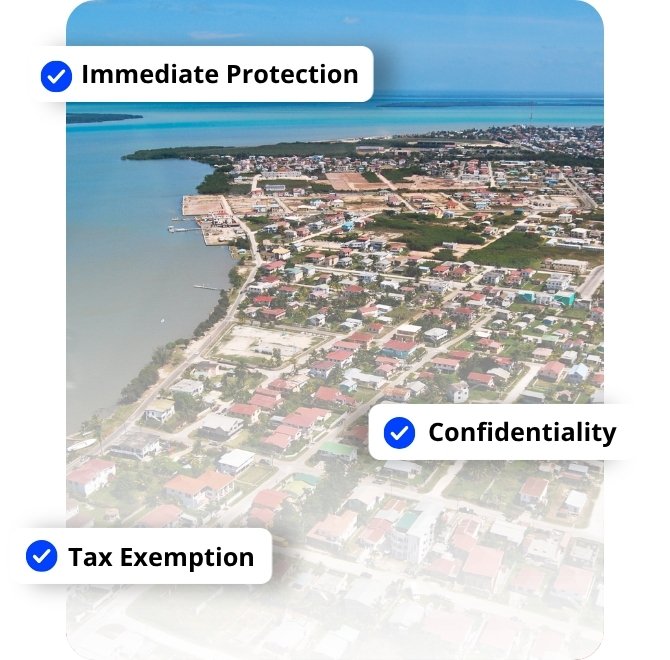
Key Benefits of a Belize International Trust
If you need strong protection for your assets but you are not ready to pay the costs associated with premium jurisdictions, a Belize offshore trust may be the right solution. It is formed very quickly, and you will get a structure that combines legal resistance and confidentiality.

Immediate Asset Protection — No Waiting Period
In many jurisdictions, a trust becomes stronger only after a limitation period passes. Belize is different in this respect: it offers immediate asset protection. If trust assets have been properly transferred, they are protected from the moment they enter the trust.
No Automatic Foreign Judgment Enforcement
No creditor, former spouse, bankruptcy claimant, or other foreign party can simply bring a foreign judgment and seize Belize trust assets as such a judgment is not automatically enforceable. Thus, your trust will benefit from an important defensive layer as the claim will be first reviewed under Belize law.
Tax Exemption for Non-Residents
If the settlor, beneficiaries, and trust assets are outside Belize, we are talking about a tax-exempt Belize International Trust. However, you may still have reporting obligations back in the country where you live, and this issue should be reviewed before you decide to create the trust.
Confidentiality — No Public Disclosure
Belize’s International Trusts Registry records only limited information about trusts: the trust name and registration date. It means that there is no public register where you need to submit information about the settlor, beneficiaries, protector, or trust assets. The trust deed also remains a confidential document. No information about the trust fund or distribution rules is available for public search.
Protection from Mareva Injunctions
The trust law in Belize gives priority to local asset protection rules rather than foreign orders (such as Mareva injunctions). This detail can play an important role if a foreign court attempts to freeze assets during litigation. If you have cross-border exposure, this may be the decisive factor to choose Belize as your international asset protection planning hub.
Cost-Effective Structure
A Belize trust is much more affordable than a Cook Islands trust and takes less time to set up. This combination makes the structure an attractive option for those who need strong creditor protection without premium-level formation and administration costs.
What Is a Belize International Trust?
A Belize International Trust is a legal arrangement established under the Belize Trusts Act. The legal ownership of assets is transferred to the trustee who manages them under the trust deed.
The structure is typically used for asset holding and wealth planning, as well as family succession and protection from creditor claims. You can combine it with a Belize IBC or another offshore company to create a two-layer structure.
Key characteristics include:
-
 legal framework under the Belize Trusts Act
 -
registration through the International Trusts Registry
-
oversight related to the IFSC framework
-
settlor, trustee, beneficiaries, and optional protector
-
no statutory minimum trust fund amount
-
no forced heirship rules applied by Belize
-
no public disclosure of settlor or beneficiaries
-
remote formation
You can structure a Belize international trust as an irrevocable trust, discretionary trust, charitable trust, land trust, or family asset protection trust: the choice depends on your goals.
Speak With an Expert Before You Set Up a Trust
Not sure whether Belize is the right jurisdiction for your assets, family, or risk profile?
We at Offshore Pro Group will help you review your goals and source of funds, as well as banking needs and tax residence before you draft the trust deed. Schedule a confidential consultation, and we will shortlist suitable structures before you make the first step.
Uliana Syva
Consultant for company registration, bank account opening, residency, and citizenship.
1000+
successful cases
13+
years of experience


Belize Trust Cost — Formation Packages
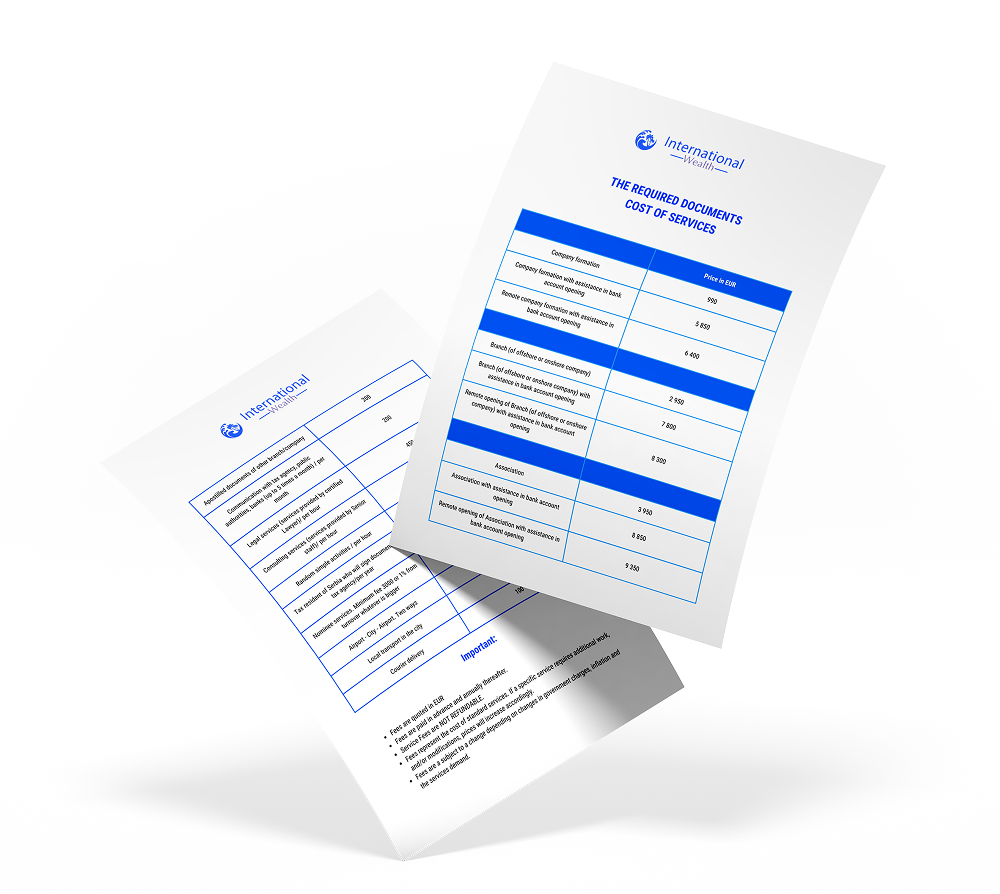
Belize trust cost depends on many factors that may include the trust deed and trustee role, as well as registration route and the level of customization your structure may require. In some cases, a trust deed is a standard document that needs minor changes, but in others we will need a custom document that details special protector powers or asset transfer rules.
Annual and Additional Costs
Annual trustee administration costs around $3,750 in the case of a simple trust, while more complex structures will be priced individually.
Additional costs may include trust deed amendments from $550, duplicate certificate from $500, asset transfer support from $1,300, as well as annual financial statement preparation from $1,800.
Required Documents for Belize Trust Formation
Wondering how to set up a trust in Belize in the most convenient way? Start with a properly prepared KYC package to ensure the process is as straightforward as possible.
For Individuals
The usual documents to be submitted by settlors and beneficiaries include:
clear color copy of a valid passport
proof of residential address (a utility bill or bank statement not older than 3 months)
tax number document (if applicable)
brief CV/business profile for complex profiles
source of funds declaration that explains how the trust will be funded
For Corporate Participants
If a company is involved, it is required to submit the following documents:
Certificate of Incorporation or equivalent
constitutional documents
Register of Directors and Shareholders
recent Certificate of Good Standing
KYC documentation on ultimate beneficial owners
Offshore Pro Group experts will help you double-check the document package before you submit it. As a result, delays are considerably reduced, and Belize offshore trust formation becomes a much more predictable procedure.
Our 4-Step Belize Trust Formation Process
In most cases, the procedure can be completed remotely, and you will not need to fly to Belize in person. Keep in mind, though, that you may be required to have the documents notarized if they are signed outside Belize.
Strategy Call and Structure Design
We will first of all clarify your purpose (asset protection, succession planning, or family wealth holding) as a different approach may be required (Trust + IBC, for instance). At this stage, we will define who will be the settlor, trustee, and beneficiaries, and decide whether you need a protector. Then we will outline the expected trust fund and trust assets. We will thus confirm that Belize is (or is not) the right jurisdiction in your case.
KYC, Trust Deed Drafting and Payment
You will provide the KYC package, the necessary information on the source of funds, and trust instructions. Then the trust deed will be prepared in compliance with the settlor’s goals. It may include trustee powers and protector rights, as well as successor trustee provisions and a flee clause (if appropriate).
Registration with IFSC and Trust Execution
The trust is registered with the International Trusts Registry. The trustee and settlor execute the trust deed, and the documents that are signed outside Belize are notarized. Once the registration is complete, the trust certificate is issued. You usually have to wait for 2–5 weeks after KYC approval and payment (the exact timeline depends on complexity and on how well the documents have been prepared).
Asset Transfer and Ongoing Administration
Assets are transferred into the trust once the establishment procedure is over. These may include company shares, investment portfolios, bank accounts, intellectual property, crypto assets, real estate outside Belize, gold, art, or other valuables. Ongoing administration includes annual fees, KYC updates, trustee communication, and compliance support.
Structure of a Belize International Trust
There are a few key roles within a Belize trust, and the trust deed must clearly explain each of them: unclear control can considerably weaken the structure.
Settlor
The settlor is the person who establishes the trust and transfers assets into it. In the case of an international Belize trust, the settlor is usually a non-resident of Belize. The assets transferred to the trust are no longer treated as the settlor’s property, and this separation is one of the most important elements of creditor protection.
Trustee
After the settlor transfers the assets to the trust, the trustee is considered the legal owner of those assets and manages them in accordance with the trust deed. If trustee services are provided commercially, you will need to engage a licensed trustee company. The trustee has fiduciary duties to the beneficiaries, and this is in no way a decorative role.
Protector
This is an optional role, but most clients find it very useful. The protector’s powers include approving/blocking trustee’s decisions and even removing/appointing a trustee. The protector adds oversight and protects the settlor’s original intentions without returning legal ownership to the settlor.
Beneficiaries
Beneficiaries are the persons or entities for whose benefit the trust is managed. These can be named individually or referred to as a class (for instance, the settlor’s children). Distributions may be fixed or discretionary, and they can also be related to long-term family planning goals.
What Assets Can a Belize Trust Fund Hold?
You can hold many types of assets in a Belize trust fund on the condition that you transfer them legally, with all supporting documents in order. Prepare the asset transfer plan before you actually fund the trust.
Common trust assets include:
-
company shares and equity stakes in Belize IBCs or foreign companies
-
investment portfolios, securities, bonds, and mutual funds
-
crypto assets and digital tokens, where compliant
-
intellectual property rights, patents, trademarks, and royalties
-
bank accounts and deposits, usually outside Belize
-
real estate located outside Belize
-
precious metals, art, collectibles, and negotiable instruments
If you intend to hold real estate located inside Belize, separate structuring may be required. Be sure to review this issue before you finalize the trust deed.
Why Choose Offshore Pro Group for Your Belize Trust Formation?
Belize trust formation is more than just filing documents. We form a structure that should meet your asset plan and family goals, as well as tax residence and banking route.
Experience Since 2009
Offshore Pro Group has successfully handled thousands of international structuring requests since 2009. The team understands trustee requirements and IFSC-related procedures, as well as banking concerns and cross-border asset protection.
End-to-End Service
We will help you choose the right structure and deal with KYC and trust deed preparation. Our experts also assist with registration and asset transfer, as well as banking and annual administration. One team coordinates the full route; we don’t leave the client to deal with separate providers.
Compliance-First Approach
A strong trust is a compliant trust, so we build structures that satisfy all the AML/CTF, KYC, source-of-funds review, UBO checks, and international standards.
Transparent Pricing
You will receive an unambiguous package structure before we start the process. That way, you will avoid hidden fees and unexpected payments later.
Start Your Belize Asset Protection Trust
A Belize asset protection trust can be a practical tool for immediate asset protection and succession planning, as well as confidential wealth holding.
You can establish the structure remotely within 2–5 weeks, depending on document readiness and the complexity of the trust deed. Contact Offshore Pro Group today for a confidential consultation and receive a clear plan for your Belize trust.
Frequently Asked Questions
What makes Belize different from other offshore trust jurisdictions?
Belize provides immediate asset protection (no waiting period is required, which sets it apart from many jurisdictions). Confidentiality level is high as no public registry is kept. Belize offers protection from certain foreign judgments and an affordable setup fee.
Can a Belize Trust be challenged by creditors?
Creditors that attempt to challenge a Belize trust will have to meet a high burden of proof: foreign legal assumptions are insufficient. Actual fraud must be proved. If you have a legitimate structure that you fund properly and it was not established to defeat an existing claim, Belize protection will be more than enough.
Is a Belize Trust recognized internationally?
Belize is a common law jurisdiction, and many common law countries treat trusts as familiar legal instruments. As for civil law countries, recognition in them depends on local law and tax rules, as well as reporting obligations. Belize is not a party to the Hague Trust Convention, so please seek cross-border advice before you make any steps.
Do I need to visit Belize to set up a trust?
The process can usually be completed remotely, so the answer is no. Tiny nuance: if you sign documents outside Belize, some of them may require notarization or apostille (on a case-by-case basis).
How long does it take to establish a Belize Trust?
You will usually have to wait 2–5 weeks after KYC approval and payment to get a fully operational Belize trust. The timeline depends on factors like the trust deed, document readiness, legalization, or asset transfer.
Can I amend or dissolve a Belize Trust later?
It depends on the trust deed. If your trust is irrevocable, it is much harder to change (and this is one more reason to prepare the deed carefully from the start). Amendments may be possible, but these should in no way weaken the structure’s asset protection purpose.
Is a Belize Trust tax-exempt?
If the settlor, beneficiaries, and assets are outside Belize, you can have a tax-exempt Belize International Trust. However, the settlor or beneficiaries may have tax obligations back in their country of residence, so local tax advice is strongly recommended.
What are the annual maintenance costs?
The cost of annual trustee administration in the case of a simple Belize trust starts from $3,750. You may need to pay additional costs, though, if you have a complex structure or need support with amendments, accounting, asset transfer work, or reporting.
Does Belize report trust information to foreign governments?
Under applicable international standards (such as CRS), Belize may exchange information internationally. However, the trust registry itself does not make settlor or beneficiary information accessible to the public.
Can a Belize Trust open a bank account?
Yes, a Belize trust can open offshore accounts where needed. In practice, the majority of accounts are opened outside Belize (in Switzerland or Europe), or with an EMI. Banks will still require KYC, source of funds, source of wealth, trust deed information, and details of the beneficiaries and trustee.
What annual obligations does the trust have?
The trust must maintain relations with its trustee or agent and pay annual fees. It is also required to update KYC information and keep internal records. The trustee may additionally need to support CRS and bank compliance, as well as reporting requests where applicable.
Can a Belize Trust be combined with a Belize IBC?
Yes. A combination of Trust and IBC is commonly used. IBC’s functions may include conducting business or holding assets, while the trust owns the IBC and adds an asset protection layer. This double-layer structure is a time-tested solution for business owners, investors, and families who look for asset separation and long-term succession planning.