


Personal Offshore Bank Account Opening
Open a personal offshore bank account with professional guidance tailored to your residency, source of funds, and financial goals. We help private clients compare reliable foreign banks for capital preservation, asset diversification, and convenient international transfers. From compliance review to account activation and first deposit, we support the full process from start to finish.
Excellent 4,6 out of 5

Who Benefits Most from Offshore Banking for Individuals?
-
 High-Net-Worth Individuals (HNWIs) Suitable for larger asset structures, wealth diversification, and long-term financial planning beyond one domestic banking system.
 -
Expats and International Workers Useful for receiving income, holding savings, and paying expenses across more than one country without relying on a single local bank.
-
Digital Nomads and Freelancers A practical option for accepting payments in multiple currencies and managing funds without being tied too tightly to one geography.
-
Global Investors Helps support cross-border investments, including real estate, securities, and other international financial opportunities.
Why Do You Need an Offshore Personal Bank Account?
Keeping all your money in one country creates concentration risk. A personal offshore bank account is a legal tool that helps protect your wealth from local currency instability, banking restrictions, and regional economic uncertainty.
It also gives you more flexibility to manage savings, transfers, and international financial planning across borders.
Key Facts About Offshore Accounts
A personal offshore account is a legal and versatile tool for individuals who want to manage their wealth internationally.
- Fully compliant when properly declared under international regulations.
- Designed for personal financial management across borders.
- Helps individuals plan and organize their wealth with greater control.
- Provides a secure, internationally recognized banking option.
Talk to an Offshore Banking Expert
Get personalized guidance on the best personal banking solution. Our specialists help you choose the right bank or EMI, prepare your documents, and streamline the application process.
Contact an ExpertUliana Syva
Consultant for company registration, bank account opening, residency, and citizenship.
1000+
successful cases
13+
years of experience


Key Advantages of a Personal Offshore Bank Account

Multi-Currency Accounts and FX Savings
Many offshore banks offer accounts in EUR, USD, GBP, CHF, and other major currencies. This helps reduce unnecessary conversion costs and gives you more control over how you hold and move funds internationally.
Enhanced Privacy and Asset Protection
A well-structured personal offshore account can improve confidentiality and reduce exposure to local financial instability, while still operating within modern compliance frameworks such as CRS and KYC.
Premium Wealth Management Services
Some banks provide access to investment portfolios, structured products, and advisory solutions that are not normally available through mass-market retail banking.
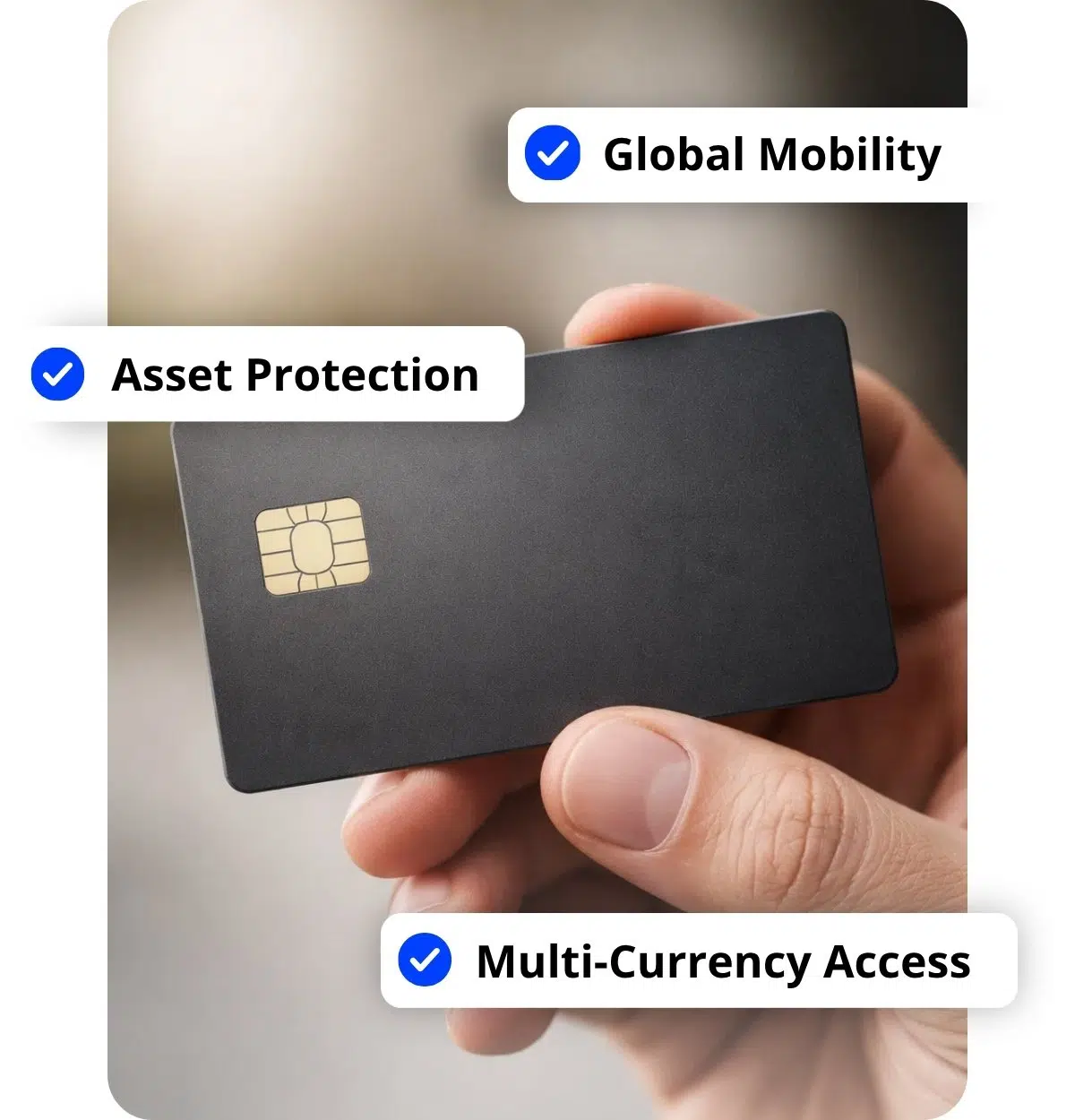
Global Mobility with Premium Cards
International debit and credit cards with higher limits can make travel, online spending, and cross-border payments much more convenient for globally mobile clients.
International Transfer Flexibility
A strong bank account offshore can simplify cross-border transfers, recurring payments, and global money management for clients who live, work, or invest internationally.
Diversification Beyond Your Resident Country
Holding funds outside your home jurisdiction can help reduce dependence on one banking system and create a more resilient personal financial structure over time.
Top Jurisdictions to Open Your Own Personal Offshore Bank Account
The right jurisdiction depends on your citizenship, tax residency, expected balance, and banking goals. Some clients prioritize traditional private banking, while others want faster onboarding and more practical day-to-day international access.
Offshore Bank Options for Individuals
Traditional offshore bank solutions are typically chosen by clients who value long-term stability, premium service, stronger deposit structures, and broader private banking capabilities. These options may require a higher opening deposit, but they often provide more robust international banking support.
| JURISDICTION | VISIT | REG. TIME | CURRENCIES | CARDS | MIN. DEPOSIT | FEE | ACTION |
|---|---|---|---|---|---|---|---|

Belize |
Not required |
1 month |
USD, EUR, CAD, GBP, CHF |
Prepaid Visa |
From 2,000 |
2,999 EUR |
See More |

Cyprus |
Required |
1 month |
Multi |
Debit, Credit, Prepaid |
– |
2,999 EUR |
See More |

Liechtenstein |
Not required |
1-2 months |
CHF, EUR, USD, GBP, JPY |
– |
5,000 CHF |
2,999 EUR |
See More |

Panama |
Not required |
1 month |
USD |
Visa Debit |
– |
3,000 EUR |
See More |

Saint-Lucia |
Not required |
1-2 months |
Multicurrency |
Visa Credit |
5,000 EUR |
2,999 EUR |
See More |

Serbia |
Optional (POA) |
1-3 days |
EUR, USD, CHF |
Visa Debit/Credit |
– |
3,000 EUR |
See More |

Singapore |
Not required |
1 month |
Multi + Crypto |
– |
– |
2,000 EUR |
See More |

USA |
Not required |
1 month |
EUR, USD |
Mastercard |
– |
5,000 EUR |
See More |

Switzerland |
Not required |
1 month |
CHF, EUR, USD |
Visa, Mastercard |
100k – 500k CHF |
From 2,999 EUR |
See More |

Montenegro |
Not required |
1 month |
EUR, USD |
Mastercard |
– |
2,999 EUR |
See More |
Belize
Cyprus
Liechtenstein
Panama
Saint-Lucia
Serbia
Singapore
USA
Switzerland
Montenegro
EMI Options for International Personal Operations
EMI solutions are often faster to open and more flexible for payments, transfers, and digital access. They are especially useful for clients who need remote onboarding, lower entry thresholds, and efficient international money movement without the full structure of a traditional offshore bank.
| JURISDICTION | REG. TIME | CARDS | FEE | ACTION |
|---|---|---|---|---|

Canada |
1-3 days |
Visa (virtual and physical) |
From 2,200 EUR |
See More |

United Kingdom |
1-3 days |
Visa, Mastercard |
From 2,200 EUR |
See More |

Lithuania |
1-3 days |
Visa, Mastercard |
From 2,200 EUR |
See More |

Kazakhstan |
3-7 days |
No Cards (Crypto/SWIFT) |
From 2,200 EUR |
See More |

Czech Republic |
1-5 days |
VISA (virtual) |
From 2,200 EUR |
See More |
|
USA |
1-3 days |
Visa, MasterCard |
From 2,200 EUR |
See More |

Estonia |
1 day |
Visa |
From 2,200 EUR |
See More |

Mexico |
1-3 days |
MasterCard |
From 3,000 EUR |
See More |
Compliance Requirements: Documents Needed to Open an Account
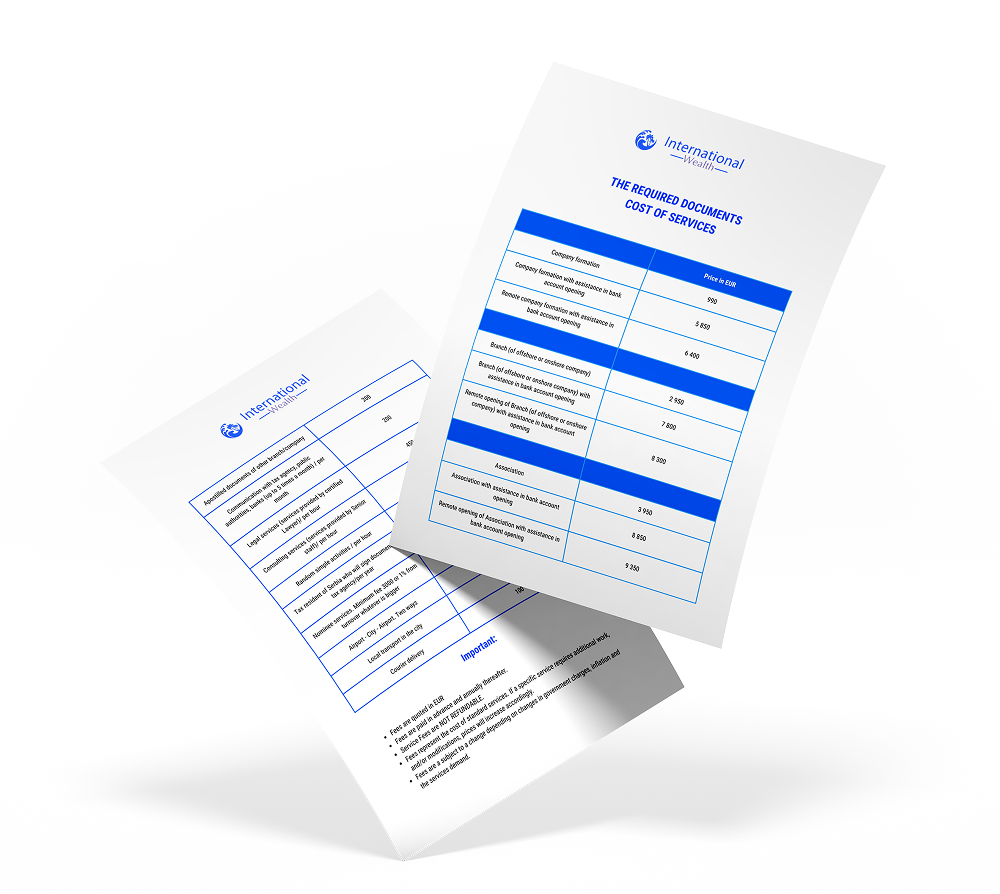
Banks and EMI providers must follow KYC and AML rules before approving any offshore personal bank account application. This is standard compliance, not bureaucracy for the sake of drama. A well-prepared file makes the process faster, cleaner, and much more predictable.
Typical documents include:
Certified copy of passport
Proof of residential address
Source of Funds and, where required, Source of Wealth
Bank statements for the last 3–6 months
Tax identification number or tax residency declaration
CV or professional profile
Employment letter or proof of business ownership
Explanation of account purpose and expected transactions
References from an existing bank, if requested
Completed bank forms and compliance questionnaires
Some banks may also request documents related to investments, company ownership, property sales, inheritance, or other financial events used to explain the origin of assets.
Two Ways to Open a Personal Offshore Bank Account
Some banks allow fully remote onboarding, while others may require a personal visit. The exact process depends on the bank, the jurisdiction, and the type of account you choose.
Remote Application
- Apply for a personal offshore bank account without traveling.
- Submit your documents online for KYC and compliance review.
- Complete identification through a video call or remote verification procedure.
Physical Application
- Visit the bank in person if a face-to-face meeting is required.
- Sign the necessary forms and complete final verification on site.
- This option is usually relevant for premium private banking or high-deposit cases.
Our 5-Step Process to Set Up Your Offshore Account
Initial Profile Assessment
We review your citizenship, country of residence, tax exposure, expected account balance, and banking goals. This helps us understand whether your case fits a traditional bank, private bank, or EMI solution.
Bank Matching
We shortlist 2–3 suitable institutions that are realistically aligned with your profile. We do not send clients blindly into a compliance wall and hope for a miracle.
KYC and Document Preparation
We help organize the required documents, explain what needs certification or translation, and make sure your file is consistent before submission.
Bank Interview Preparation (If Required)
If the bank wants a call or video meeting, we prepare you in advance. You will know what questions are likely to come up and how to explain your case clearly.
Account Activation & Funding
Once approved, you receive the account details, complete any final compliance steps, and make the initial deposit. We stay involved until the account is fully active and usable.
Why Choose Offshore Pro Group for Personal Offshore Banking?
Pre-Approval Approach
We do not file applications blindly. Every case is reviewed before submission to reduce the risk of rejection and improve your chances of a smooth account opening.
Global Network
We work with 50+ banking partners across multiple jurisdictions, which allows us to match clients with more suitable providers instead of forcing a one-size-fits-all option.
Confidentiality
Your documents and personal information are handled with strict confidentiality throughout the process. Sensitive financial information deserves professional care, and we provide it.
End-to-End Support
We stay with you through the full process: bank selection, compliance preparation, submission, interview support, activation, and funding. That saves time and reduces mistakes at every stage.
Take Control of Your Financial Future Today
Take control of your financial future today with a confidential consultation focused on your goals, residency profile, and asset strategy. We will help you identify the best offshore personal bank accounts for your situation and assess your chances before you apply. Contact us to get a practical, compliant roadmap for opening the right account.
Frequently Asked Questions (FAQ)
How do I open a personal offshore bank account?
To open a personal offshore bank account, you first need to choose the right bank or EMI based on your citizenship, residency, source of funds, and expected activity. Then you prepare a compliance file, complete the bank’s forms, and go through review. We guide clients through each step to improve approval chances.
Can I open a personal offshore bank account completely online without traveling?
Yes, many institutions now allow remote onboarding through secure document submission and video verification. However, some premium offshore banks still require a personal visit, especially for larger deposits or private banking relationships. We identify fully remote-friendly options before the process begins.
How long does it take to open and activate a personal offshore account?
The timeline depends on the institution, your profile, and how quickly the documents are prepared. Some remote-friendly solutions can be opened within days, while traditional banks may take several weeks. Activation also depends on final compliance approval and receipt of the opening deposit.
Which country is best for a personal offshore bank account?
There is no single best country for everyone. The right jurisdiction depends on your residency, budget, expected balance, preferred currencies, and whether you need private banking, international transfers, or easier remote access. The best solution is the one that fits your profile and is realistically approvable.
What is the difference between a traditional offshore bank and an EMI for individuals?
A traditional offshore bank is usually chosen for wealth preservation, broader banking services, and stronger private banking support. An EMI is often faster, more digital, and more practical for everyday payments and international transfers. One is not automatically better; it depends on what you actually need.
Is it legal to have an offshore personal bank account if I live in my home country?
Yes, in most cases it is legal to hold an offshore account as a private individual, provided you comply with tax, reporting, and disclosure rules in your country of residence. Offshore banking is not illegal by itself. Problems begin only when clients ignore compliance obligations.
Can I get international debit or credit cards with my personal offshore account?
Yes, many banks and EMI providers offer international debit cards, and some also provide premium credit card solutions. Availability depends on the jurisdiction, the type of institution, and your client profile. Card limits, supported regions, and fees vary from provider to provider.
What documents are required to open a personal offshore bank account?
Most banks require a passport, proof of address, source of funds information, and completed application forms. Depending on the case, they may also request bank statements, tax details, proof of employment, business ownership documents, or references. The stronger the file, the smoother the review.
Is there a minimum opening deposit for personal offshore accounts?
Yes, many providers require an opening deposit, but the amount varies widely. Some EMI solutions have relatively low entry thresholds, while private or traditional offshore banks may expect a more substantial initial deposit. Fees, balance expectations, and ongoing maintenance conditions should always be checked in advance.
What does “Source of Funds” mean, and why do offshore banks require it?
“Source of Funds” explains where the money going into the account comes from. This may include salary, business income, investments, inheritance, dividends, or property sales. Banks ask for it because compliance rules require them to understand the origin of funds and assess financial risk properly.