A Nevis LLC and a Cook Islands LLC are two popular options often used for asset protection. These respected offshore LLCs can help you achieve serious goals: separate your personal wealth from business risk, make the member’s interest harder to seize, or turn a lawsuit into an expensive undertaking for a creditor.
Each jurisdiction has its own practical angle.
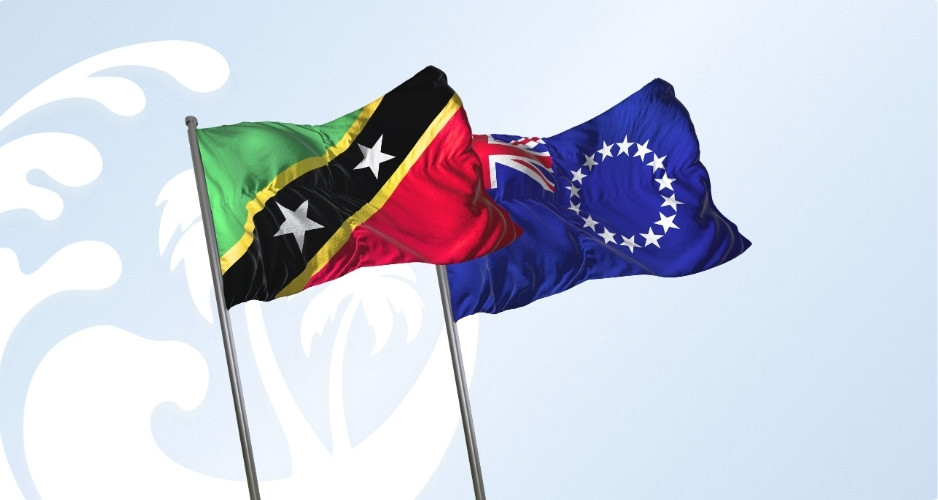
Nevis is associated with uncomplicated offshore company setup and a shorter charging order period.
The Cook Islands set litigation barriers that take a lot of effort to overcome. The country is also appreciated for convenient digital onboarding and effective trust planning.
The final decision may be difficult because you need to consider multiple factors, such as speed, cost, geography, or bank account access.
Quick Comparison
| Parameter | Nevis LLC | Cook Islands LLC |
|---|---|---|
| Formation Timeline | Sometimes 2–3 months | Often 3–7 business days after KYC |
| Annual Cost | Moderate to high | Moderate to high |
| Charging Order Expiration | 3 years, non-renewable | 5 years, non-renewable |
| Fraudulent Transfer Limit | Often discussed as 2 years | Often shorter in Cook Islands planning |
| Creditor Bond Requirement | Court may require security | Security may also be required |
| Privacy | Member names are not public | Member names are not public |
| Foreign Judgment Recognition | Local action usually required | Local action usually required |
| KYC/Onboarding | Traditional document review | More digital workflow |
| Banking Access | Possible, compliance-heavy | Possible, compliance-heavy |
| Regulatory Environment | Caribbean offshore jurisdiction | Self-governing country linked to New Zealand |
| Best Use Case | Shorter charging order exposure | Remote geography and trust planning |
| Combined Trust Structure | Available | Available |
What Is an Offshore LLC and Why Does Jurisdiction Matter?
An offshore LLC is useful only when the law it relies on is strong.
How an Offshore LLC Protects Your Assets
The main benefit of an LLC is separation between the company and the member’s personal property. The company’s debts generally remain with the company, and the member should not be personally liable if the structure has been properly formed and maintained. The reverse matters as well: the company’s property should not be automatically used to repay the member’s personal creditor.
The charging order is the key tool for an offshore LLC: this is the creditor’s sole remedy against a member’s interest. The creditor does not receive voting rights, account control, or liquidation power, but they acquire the right to distributions. LLCs for asset protection revolve around the law on charging orders.
Why Nevis and the Cook Islands Lead the Field
Laws on LLCs in both Nevis and the Cook Islands provide strong creditor resistance under local law. Each jurisdiction deals with companies and foreign judgment issues in its own way. If you need clear statutory protection, go for Nevis. The Cook Islands are often an ideal choice for complex trust planning where you can set up a structure that will be much harder for a creditor to reach.
Nevis LLC vs. Cook Islands LLC: Key Legal Differences
The real test starts when a creditor tries to enforce a claim.
Charging Order Protection: Duration and Scope
The charging order does not hand the company to the creditor; it only regulates the indebted member’s interest. The member does not lose their rights: the charging order just redirects some distributions to the creditor.
Nevis has a clear advantage here: a charging order against a Nevis LLC expires after three years and is impossible to renew. The Cook Islands offer a longer period of five years, which makes Nevis easier to defend.
Callout: Nevis LLC: 3-year limit. Cook Islands LLC: 5-year limit. Advantage: Nevis.
Fraudulent Transfer Statute of Limitations
If the member is suspected to have moved the asset into the company to avoid a claim, it can be challenged under fraudulent transfer law. Therefore, each move should be properly documented and made on time.
In Nevis, assets can be challenged within 2 years. In the Cook Islands, in turn, the challenge window can be shorter; this is the reason why this jurisdiction is stronger in trust-based planning.
Want stronger asset protection? Double-check each document and open the structure in time before the creditor appears.
Callout: Nevis: 2-year window. Cook Islands: often shorter in asset protection planning. Advantage: Cook Islands.
Non-Recognition of Foreign Judgments
A creditor that has a foreign judgment against a Nevis or Cook Islands company does not gain control over it. They will have to start the proceedings locally and make local filings, work with a local attorney, and win the case. All this entails additional costs, which deters many creditors. A Nevis court may require security before the case starts; Cook Islands courts do not impose a fixed creditor bond, but security may be required as in Nevis.
Burden of Proof
The high burden of proof in both jurisdictions is the factor that may change the game. A judgment made back home typically relies on a civil standard, while offshore asset protection raises the bar.
A Cook Islands or Nevis court usually wants the creditor to meet a very high standard, often described as “beyond a reasonable doubt.” As a result, creditors find it extremely hard to win a case, especially if the structure was not formed at the last minute. These entities are in no way invincible; still, there is a long way from a foreign judgment to overturning them.
Privacy and Confidentiality
Privacy is useful, but it is not equal to tax secrecy.
Membership Records and Public Filings
Both jurisdictions take care of nonresident privacy: member names are kept in internal records and are not available to the public. The company’s registered agent is the only person who has access to all documents. The public register does not contain the names of members.
CRS and FATCA Compliance: What US Persons Must Know
Even if you operate an offshore LLC, you will still need to provide relevant tax reporting. U.S. persons may have extra obligations, such as FBAR or Form 8938; this may happen if the amount in foreign accounts exceeds the reporting threshold.
CRS and FATCA are just as important. Banks are allowed to collect the data on tax residency and report account information under the current regulation.
Formation, Setup and Operational Differences
A strong legal structure still has to be formed, funded, and maintained.
Setup Timeline: Days vs. Months
The Cook Islands have the advantage of quick registration: if the document package is ready, digital KYC portals will help you get a company within several business days. As for Nevis, you may need more time as compliance and regulatory changes have made the process a bit less predictable.
KYC and Onboarding Process
A good law firm that will handle your case will always ask detailed questions before the company is formed. Banks are highly likely to ask the same questions later, so this is an important preparation stage.
Annual Maintenance and Cost Comparison
Registered agent fees and government renewal fees, as well as provider charges are a must. In some cases, either jurisdiction may charge extra document fees. Also, compliance support for your bank account will entail additional costs.
While official filing and renewal fees for a Nevis LLC are known in advance, the total cost depends on the provider you engage. If you want to have two structures, a Cook Islands Trust and Cook Islands LLC, you will have less compliance work as they are formed in one country.
Re-Domiciliation and LLC Migration
Both jurisdictions may allow migration from another country, but you should remember that you migrate with existing liability. If there is a judgment against the LLC, it will “migrate” along with it. Sometimes, a much safer move is to establish a new company with clean documents.
Geographic and Litigation Barriers
A creditor’s real-world cost is just as important as the statute.
Barrier to Creditor Litigation: Distance and Cost
The first factor that affects travel and hearing logistics is the distance: the Cook Islands are located far from the United States. Second, a creditor will need to find local counsel who will work with the case, which is not that easy.
Nevis does not have the distance factor, so the practical barrier is a bit lower despite the fact that this is an offshore jurisdiction. If you need distance to reach your goals, the Cook Islands would be a better choice.
Attorney Availability and Conflict of Interest
Many attorneys in the Cook Islands cooperate with trustees, registered agents, or financial firms, which considerably narrows the market. As a result, the professional market is so small that most local attorneys will be conflicted out. It does make the process harder, even though it does not block it altogether.
The Combined Structure: Nevis Trust + Nevis LLC
A Nevis Trust + Nevis LLC creates a two-layer structure within the same jurisdiction. The trust is the holder of the LLC interest, while the LLC holds the asset, investment account, or operating interest. You can use a trust to change the ownership picture and take advantage of the charging order protection provided by the LLC.
Nevis LLC Inside a Cook Islands Trust: An Alternative
Sometimes, a Cook Islands Trust plus a Nevis LLC turns out to be a more beneficial structure. It combines the 3-year charging order advantage provided by the Nevis company and one of the strongest offshore trust regimes in the Cook Islands. This is a document-heavy structure as you will have to deal with two countries, two providers, two document sets, and more compliance work; however, a high-value asset plan justifies the cost and effort.
Which Is Better for Your Situation? A Decision Framework
There is no universal winner.
| Your Primary Goal | Recommended Structure |
|---|---|
| Maximum litigation barrier and remote geography | Cook Islands LLC or Cook Islands LLC + Trust |
| Fastest setup timeline | Cook Islands LLC |
| Shortest charging order exposure | Nevis LLC |
| Shortest fraudulent transfer window | Cook Islands LLC or Cook Islands trust-based structure |
| US real estate holdings | Nevis LLC or Nevis LLC + Cook Islands Trust |
| Combined trust + LLC in one jurisdiction | Cook Islands LLC + Cook Islands Trust |
| Operating business with active management | Either, depending on bank account needs |
| Estate planning / generational wealth | Cook Islands Trust + Cook Islands LLC |
Nevis may be a practical choice for real estate as the jurisdiction is more familiar to U.S.-based advisors. If the litigation risk is high, opt for the Cook Islands as the distance itself will make the protection stronger.
Regulatory Environment and Institutional Trust
Regulation is important: banks look at the country behind the company.
Cook Islands Regulatory Oversight
The Cook Islands are a self-governing country in free association with New Zealand. New Zealand traditionally has a high ranking in global corruption perception indexes, which supports institutional confidence in the region. Trustee companies in the Cook Islands are licensed and supervised by local authorities.
Nevis: A Mature Offshore Jurisdiction
Nevis, a part of the independent Federation of St. Kitts and Nevis, boasts a mature offshore financial services sector. This is the jurisdiction whose nonresident LLCs and trust structures are widely known in business circles.
Nevis LLC vs. Cook Islands LLC: Summary and Verdict
Nevis has the edge on charging order duration as three years is definitely better than five, and it may be decisive for some disputes. The jurisdiction may also be a better fit for real estate planning and holding structures, as well as situations when you need a respected offshore LLC but you don’t want to build a more complex Pacific structure.
If we look at practical litigation barriers, the Cook Islands definitely has the edge here. This is a remote country with a small legal market and a strong trust ecosystem where digital onboarding can be faster. The Cook Islands are worth considering if you are looking for maximum resistance, generational planning, or a combined trust structure.
In some cases, a combination works equally well: a Cook Islands Trust paired with a Nevis LLC is, in effect, a strong trust layer powered by a shorter charging order period. However, be ready to pay more and go through legal review.
FAQ
What is the main difference between a Nevis LLC and a Cook Islands LLC?
A Nevis LLC has a shorter charging order period of three years, while a Cook Islands LLC has a longer period: five years. However, if you choose the Cook Islands, you will benefit from stronger geographic and litigation barriers that will work especially well if you set up a trust in addition to an LLC.
Can a US citizen own an offshore LLC in Nevis or the Cook Islands?
Yes. If you are a US citizen, you can set up an offshore LLC in either jurisdiction, but you will still have tax reporting duties to perform. FBAR, Form 8938, and other reporting may apply depending on the account and ownership structure.
Is the Cook Islands LLC better than a Nevis LLC for privacy?
Privacy in both jurisdictions is strong: there is no public access to member names. If you set up a layered trust structure, the Cook Islands may be a stronger option. Nevis, in turn, is a good choice if you establish a simple offshore LLC.